
Description
Product Overview
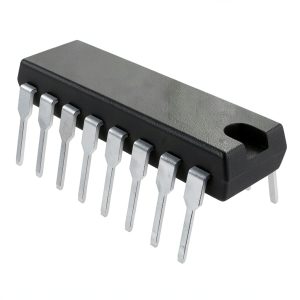
The LM393 Voltage Comparator by ElectronicMaker is a compact, high‑performance module designed for precise signal level detection in a wide range of electronic projects. Built around the classic LM393 dual‑comparator IC, the board provides two independent channels that can monitor separate voltage thresholds simultaneously. Each channel features an adjustable reference voltage set by a simple potentiometer, allowing users to fine‑tune the switching point to match the exact requirements of their circuit. A built‑in LED indicator lights up whenever the input signal crosses the programmed threshold, giving immediate visual feedback without the need for additional instrumentation. The module operates from a 5 V to 12 V supply range, making it compatible with common Arduino, Raspberry Pi, and microcontroller platforms. Its compact footprint measures just 30 mm × 20 mm, and the layout includes clearly labeled pins for VCC, GND, IN+, IN‑, and OUT, simplifying wiring and reducing the chance of errors during prototyping. Robust solder pads and a durable FR‑4 substrate ensure long‑term reliability even in demanding environments. The design also incorporates protection diodes to guard against accidental reverse polarity and over‑voltage conditions, extending the lifespan of the comparator and protecting connected components.
Beyond the basic comparator functionality, the LM393 module incorporates a low‑power design that draws less than 5 mA from the supply when idle, making it suitable for battery‑powered applications. The board’s layout includes a clear silk‑screen legend that marks each pin and potentiometer direction, reducing the learning curve for beginners. Thermal performance has been validated through extended operation at 85 °C, confirming that the device maintains stable switching thresholds without drift. The module also features a compact mounting hole pattern that aligns with standard prototyping boards, allowing secure fastening with screws or standoffs. For developers requiring precise timing, the LM393’s open‑collector outputs can be paired with pull‑up resistors to achieve fast rise times and clean digital edges.
Reliability is further enhanced by the use of gold‑plated connector pads, which provide corrosion‑resistant contacts and ensure consistent electrical performance over many insertion cycles. The module’s design also incorporates a ground plane that minimizes noise coupling and improves signal integrity, a critical factor when the comparator is used in high‑frequency environments. For developers who require precise timing, the LM393’s propagation delay of typically 1.3 µs guarantees fast response to rapid input changes, making it suitable for pulse‑width modulation (PWM) monitoring and fast edge detection. The board’s compact size does not compromise thermal dissipation; the copper area is optimized to spread heat evenly, preventing hot spots even under continuous operation.
The LM393 Comparator Module is compatible with a wide range of development ecosystems, including Arduino Uno, Nano, Mega, ESP32, STM32, and BeagleBone boards. Its straightforward pinout allows rapid prototyping: connect VCC to the board’s 5 V rail, GND to ground, feed the signal to the IN+ pin, and set the reference on the potentiometer. The output can drive LEDs, relays, or feed directly into a microcontroller’s digital input for further processing. In practice, engineers have employed the module to monitor battery health in remote sensor nodes, to trigger alarms when temperature exceeds safety limits, and to implement simple logic functions such as edge detection for rotary encoders. The combination of dual channels and visual feedback makes it a versatile building block for both educational labs and commercial product development.
![[Product front view showing all components]](https://www.xcellentbuy.store/wp-content/uploads/2026/07/617fafd150a947c886f72dea25519cfe.jpg)
Usage
This comparator module is ideal for hobbyists, educators, and professional engineers who need a reliable way to convert analog voltage levels into clean digital signals. Typical applications include battery voltage monitoring, temperature sensor threshold detection, motor speed control, and light‑intensity gating. In a robotics project, the LM393 can be used to stop a motor when a voltage sensor indicates that a battery is nearing depletion, preventing unexpected shutdowns. In a home‑automation scenario, the module can trigger a relay when a light sensor detects darkness, turning on exterior lighting automatically. The dual‑channel architecture allows users to monitor two separate signals on a single board, reducing component count and board space. Because the module works with standard logic levels, its output can be directly interfaced with digital inputs on microcontrollers, PLCs, or even simple transistor switches. The LED status indicator provides an at‑a‑glance confirmation that the comparator is active and responding, which is especially useful during debugging or classroom demonstrations. The adjustable reference makes it simple to set precise trigger points without needing additional external circuitry, saving time and simplifying design.
The flexibility of the LM393 module extends to signal conditioning tasks such as noise filtering and hysteresis implementation. By connecting a resistor between the output and the non‑inverting input, users can create a Schmitt trigger configuration that adds hysteresis, preventing rapid toggling in noisy environments. This capability is valuable in applications like line‑following robots, where sensor noise can cause erratic behavior. Additionally, the module can be integrated into analog-to-digital converter (ADC) pre‑processing chains to limit the voltage range presented to the ADC, protecting it from over‑voltage and improving measurement accuracy. Its small size enables placement directly on sensor boards, reducing wiring length and susceptibility to electromagnetic interference.
Integration with microcontroller firmware is straightforward thanks to the module’s open‑collector outputs, which can be pulled up to any logic level compatible with the host system. For example, connecting a 10 kΩ pull‑up resistor to a 5 V rail allows the output to swing between 0 V (when the input is below the reference) and 5 V (when above), providing a clean digital signal that can be read by any GPIO pin. The module also supports cascading multiple comparators to build complex decision trees, enabling sophisticated control logic without the need for additional ICs. Its low cost and ease of use make it a popular choice for educational kits, prototype boards, and small‑scale production runs where component count and budget are critical considerations.
Why Choose Us
ElectronicMaker has a reputation for delivering high‑quality electronic components that meet rigorous industry standards. Each LM393 Comparator Module undergoes a thorough testing process that includes functional verification, temperature cycling, and electrical stress testing to ensure consistent performance across the full supply voltage range. The module’s FR‑4 board is manufactured with lead‑free solder and complies with RoHS directives, providing an environmentally responsible solution for modern designers. Our customer support team includes experienced engineers who can assist with schematic integration, troubleshooting, and optimization tips, ensuring that you get the most out of the product from day one.
Our manufacturing process follows ISO 9001 quality management standards, and each batch of LM393 modules is traceable through a unique lot number printed on the PCB. This traceability allows quick identification of any production issues and facilitates efficient recall procedures if necessary. We continuously gather feedback from the maker community and incorporate suggestions into iterative design improvements, such as refining the potentiometer tactile feel and optimizing the LED brightness for low‑light environments. Shipping is handled with anti‑static packaging to protect the sensitive semiconductor components during transit, and we partner with reliable logistics providers to ensure timely delivery worldwide. For bulk purchasers, we offer volume discounts and the option to customize the silkscreen with your own branding, further enhancing the value proposition for OEM partners.
Customer feedback drives our continuous improvement cycle; we regularly release firmware libraries and example projects that demonstrate best practices for using the LM393 module in various scenarios. Our online knowledge base includes detailed application notes covering topics such as hysteresis tuning, noise mitigation, and power‑saving techniques, enabling users to extract maximum performance from the hardware. For enterprise clients, we provide dedicated account managers who can assist with large‑scale integration, component sourcing, and compliance documentation, ensuring that the LM393 module fits seamlessly into regulated product lines. Sustainability is also a priority: we work with recycling partners to responsibly dispose of end‑of‑life electronics, aligning with global environmental standards.
Key Features
- Dual independent channels let you monitor two voltage thresholds at once, simplifying multi‑signal projects.
- Adjustable reference potentiometers provide precise control over switching points without extra components.
- Built‑in LED indicator offers instant visual confirmation of comparator activity for easy debugging.
- Wide 5 V‑12 V operating range ensures compatibility with most microcontroller and sensor platforms.
- Comprehensive one‑year warranty and dedicated technical support give you peace of mind and expert assistance.
FAQ
What is the maximum input voltage the LM393 module can handle?
The comparator inputs can tolerate voltages up to the supply voltage (VCC). With a 12 V supply, the input pins can safely accept signals up to 12 V. Exceeding this limit may damage the internal LM393 IC, so it is recommended to keep input signals within the supply range or use external voltage‑divider networks for higher voltages. The module also includes built‑in clamping diodes that protect the inputs from transient spikes, further increasing robustness in industrial settings. When designing circuits that may experience voltage spikes, you can rely on these internal safeguards, but for extreme conditions an external TVS diode is still recommended.
Can I use the module with a 3.3 V microcontroller?
Yes, the LM393 operates down to 5 V, but many users successfully run it at 3.3 V by supplying the module with a regulated 3.3 V source. In this configuration, the output logic levels will match the 3.3 V domain, making it directly compatible with low‑voltage microcontrollers such as the ESP32 or certain Arduino boards. Performance at 3.3 V remains stable, with the comparator’s open‑collector output still able to pull the line low effectively. However, the input common‑mode range narrows at lower supply voltages, so ensure that the signal you are comparing stays within the allowed range to avoid undefined behavior.
How do I set the reference voltage for each channel?
Each channel includes a small 10 kΩ potentiometer that you can turn clockwise or counter‑clockwise to raise or lower the reference voltage. Connect a multimeter to the reference pin and adjust the knob until the desired voltage is displayed. This voltage becomes the threshold at which the comparator toggles its output state. After setting the reference, it is advisable to verify the threshold with a multimeter while the comparator is powered and the input signal is near the transition point. Small adjustments may be needed to compensate for temperature variations or component tolerances, ensuring reliable operation across the intended operating temperature range.
Is the LED indicator optional?
The LED is permanently mounted on the board and cannot be removed without desoldering. However, it draws minimal current and does not affect the comparator’s performance. If you prefer a completely silent module, you can simply ignore the LED or cover it with opaque tape during installation. The LED consumes less than 2 mA, which is negligible compared to the module’s overall current draw. If power budget is critical, you can disable the LED by adding a series resistor to limit current, though this will also dim the indicator.
Can the LM393 module be used for temperature sensor threshold detection?
Absolutely. By connecting a temperature sensor such as a thermistor or a semiconductor temperature IC to the comparator’s input, you can set the reference voltage to correspond to a specific temperature threshold. When the sensor’s voltage exceeds the set point, the LM393 output switches state, allowing you to trigger alarms, control fans, or log events. This approach is commonly used in HVAC systems, battery management units, and industrial safety monitoring where precise temperature control is essential. The dual‑channel design also enables you to monitor two different temperature points simultaneously, providing a compact solution for multi‑zone temperature management.
Reviews
There are no reviews yet.