
Description
Product Overview
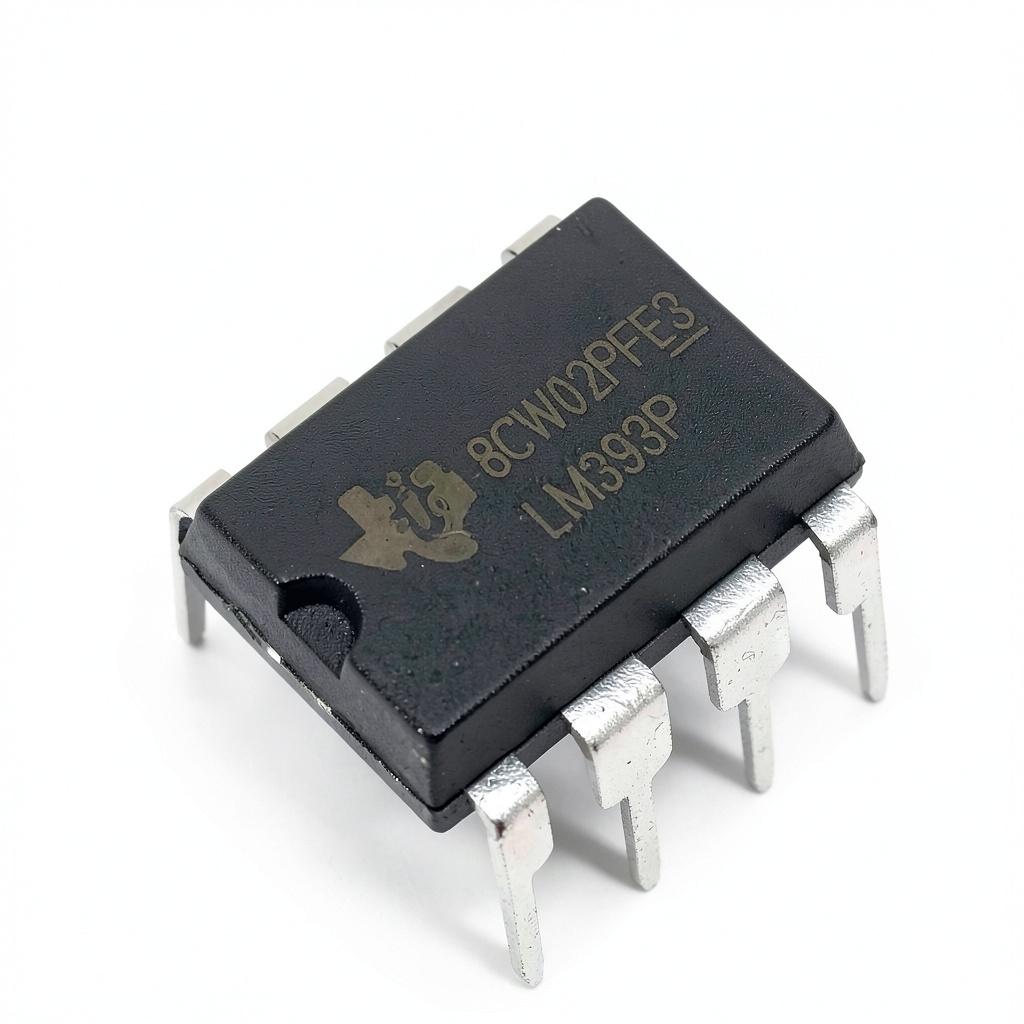
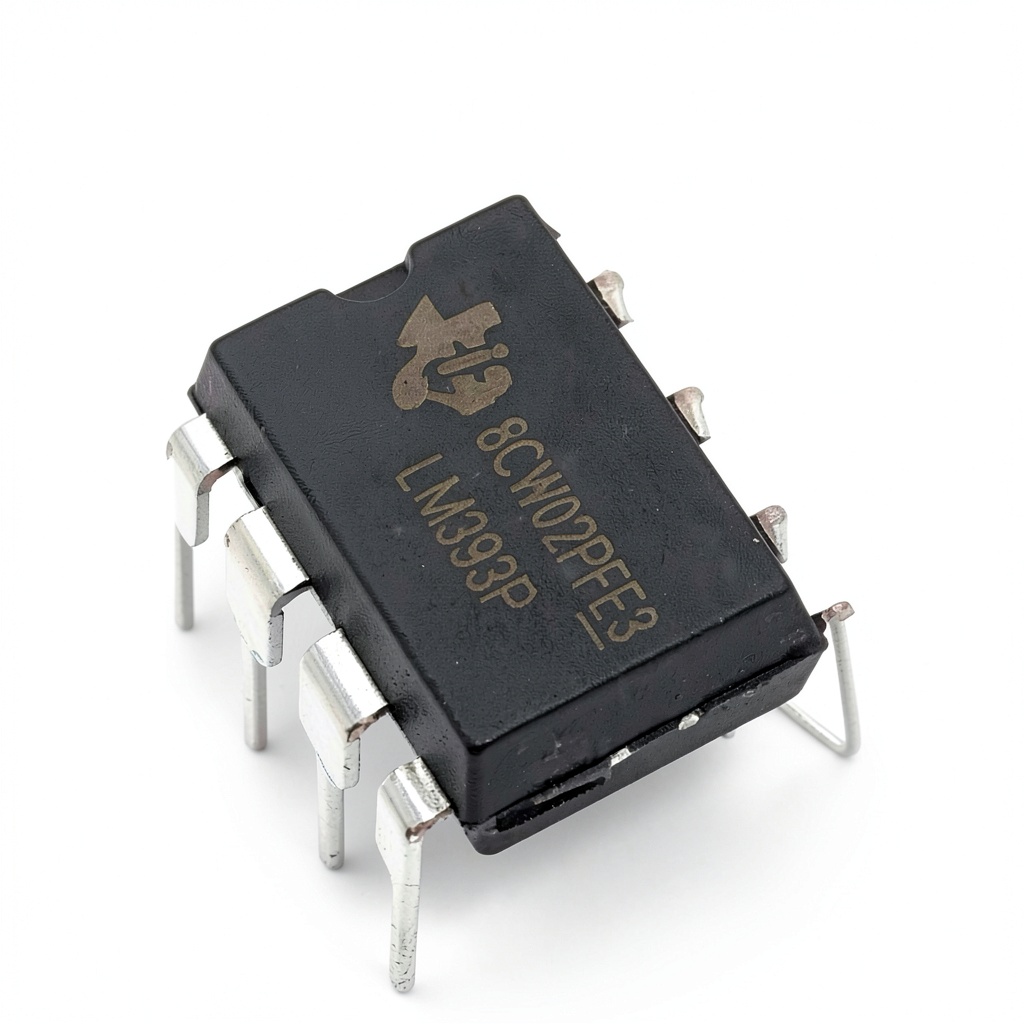
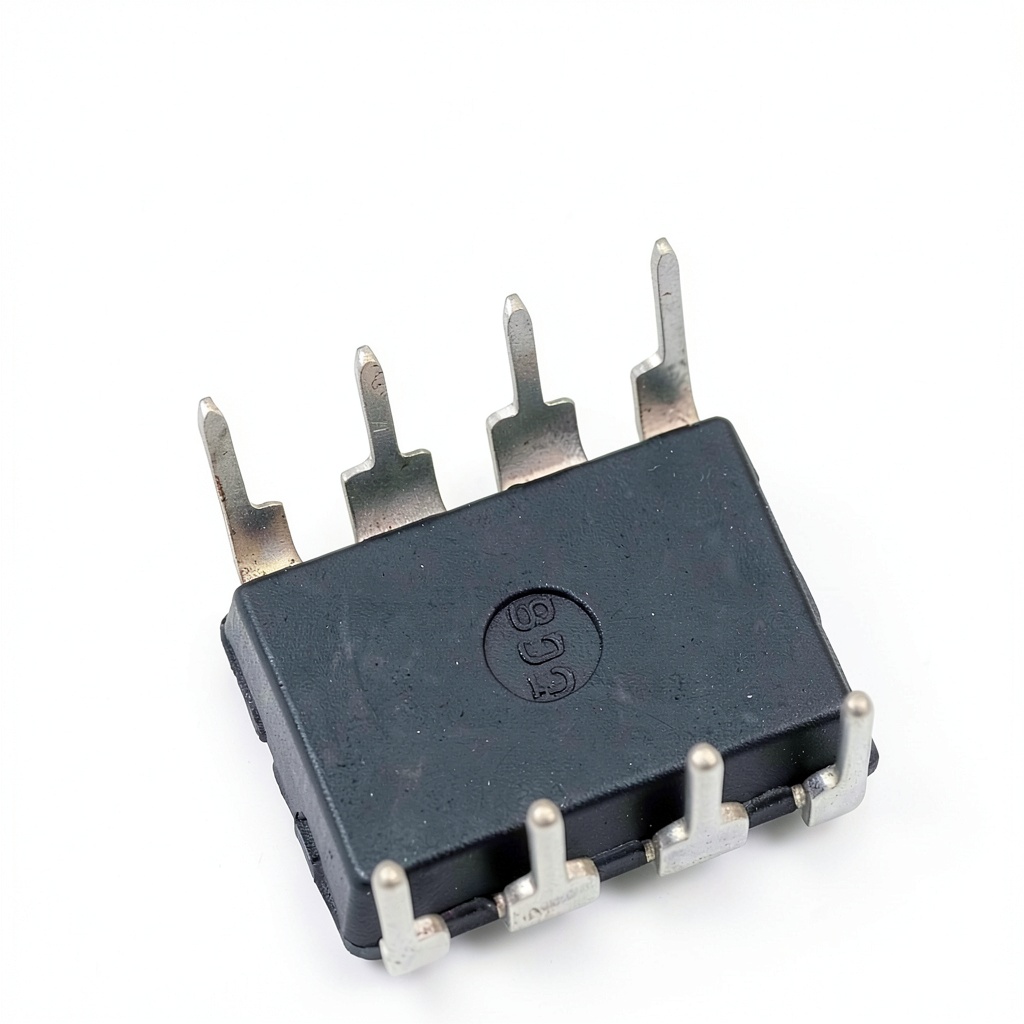
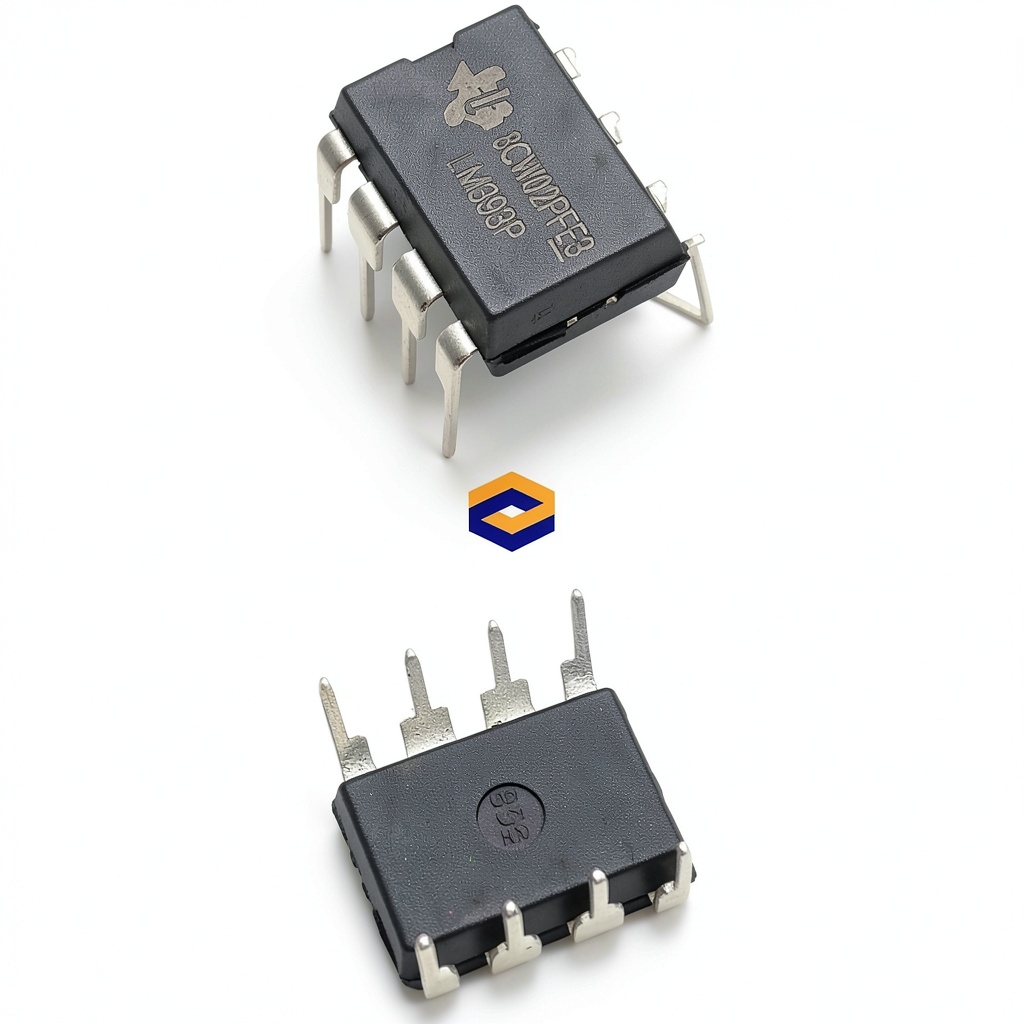
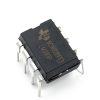
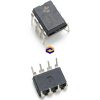
The LM393P from Texas Instruments is a dual differential comparator designed for a wide range of industrial and scientific applications. Packaged in an eight‑lead DIP (DIP‑8) format, the component is ideal for breadboard prototyping as well as through‑hole production runs. Each comparator operates independently, allowing designers to compare two separate voltage signals against a reference voltage with high precision. The device supports a single‑supply or dual‑supply configuration, accepting voltages from 2 V up to 36 V, which makes it compatible with both low‑voltage logic circuits and higher‑voltage power domains.
One of the standout characteristics of the LM393P is its exceptionally low supply‑current drain. At typical conditions each comparator draws only about 0.4 mA, regardless of the supply voltage, helping to extend battery life in portable systems. The input bias current is equally low, typically 25 nA, reducing the loading effect on high‑impedance signal sources. With a typical input offset voltage of just 2 mV, the comparator provides accurate threshold detection without the need for additional calibration components.
The internal architecture includes an open‑collector output stage that can sink up to 16 mA, enabling the device to drive a variety of load types, from LEDs to relay coils. The output is also capable of interfacing directly with digital logic families such as TTL and CMOS, thanks to its wide output voltage swing. The LM393P’s robust design includes internal temperature compensation, ensuring stable operation across the industrial temperature range of –40 °C to 125 °C.
Manufactured by Texas Instruments, a trusted name in analog and mixed‑signal semiconductor technology, the LM393P benefits from the company’s rigorous quality control processes. The part is listed under the ASIN B07PJBTVQ8 and has achieved a respectable ranking in the Amazon Best Sellers list for signal comparators, reflecting its popularity among engineers and hobbyists alike. The component is currently in production and is not discontinued, offering reliable availability for long‑term projects.
Typical applications for the LM393P include voltage level translation, zero‑cross detection, pulse‑width modulation (PWM) monitoring, and over‑current protection circuits. Its ability to operate from a single 5 V supply makes it a convenient choice for microcontroller‑based designs, while the option to use dual supplies (for example ±12 V) provides flexibility for analog front‑ends that require symmetrical voltage rails. The comparator’s fast response time, combined with its low propagation delay, ensures that rapid changes in input signals are captured accurately, which is essential in motor control and switching power supply feedback loops. Additionally, the open‑collector output can be pulled up to any voltage within the supply range, allowing designers to tailor the logic level to match downstream circuitry without additional level‑shifting components.
Beyond its basic comparator function, the LM393P includes internal hysteresis options that can be configured by external resistors to reduce output chatter in noisy environments. Designers can implement a simple positive feedback network to set the desired hysteresis voltage, improving noise immunity for applications such as switch debouncing or slow‑changing sensor signals. The device also features a low propagation delay, typically 1.3 µs, which enables rapid response to fast input transitions, a critical factor in high‑speed PWM monitoring and fault detection circuits. Thermal performance is enhanced by the silicon‑on‑insulator (SOI) process, which provides excellent isolation between the active devices and the substrate, further reducing temperature‑induced drift.
Thermal management is straightforward with the LM393P thanks to its modest power dissipation. The device’s maximum power dissipation is 500 mW, allowing it to operate safely without a heatsink in most low‑power applications. For designs that push the upper supply limits, a small copper area on the PCB beneath the DIP‑8 leads can serve as an effective thermal spreader, ensuring the junction temperature remains within safe limits. The comparator’s robust construction also tolerates short‑circuit conditions on the output, providing an added layer of protection for downstream circuitry.
![[Product front view showing all components]](https://www.xcellentbuy.store/wp-content/uploads/2026/07/36cd97cb2427483b97782e20fbb29f49.jpg)
Usage
The LM393P is well suited for a variety of industrial and scientific environments where reliable voltage comparison is required. In process control panels, the comparator can monitor sensor outputs such as temperature, pressure, or flow transducers and generate a digital alarm when a measured value exceeds a predefined threshold. Its wide supply voltage range allows it to be powered directly from the same rail as PLC I/O modules, simplifying wiring and reducing the need for additional regulators. The open‑collector output can drive indicator LEDs, relay coils, or transistor switches, making it easy to integrate into existing control schematics.
For hobbyist and educational projects, the DIP‑8 footprint provides a convenient form factor for breadboard experimentation. Students building simple line‑following robots or low‑cost data acquisition systems can use the LM393P to detect zero‑crossings of AC signals, create pulse‑width modulation (PWM) comparators, or implement basic analog‑to‑digital conversion stages. Because the device consumes only 0.4 mA per comparator, battery‑powered prototypes benefit from extended run times, which is especially valuable in remote sensor nodes or portable test equipment.
In automotive and automotive‑related applications, the comparator’s ability to operate from dual supplies enables it to handle both positive and negative signal swings common in sensor conditioning circuits. The low input bias current minimizes loading on high‑impedance transducers, while the 2 mV typical offset voltage ensures precise threshold detection for safety‑critical functions such as over‑temperature shutdown or low‑voltage lockout. The robust temperature range of –40 °C to 125 °C guarantees stable operation in harsh environments, from factory floors to outdoor installations.
When deploying the LM393P in noisy industrial settings, proper grounding and shielding techniques are essential to maintain signal integrity. Placing the comparator close to the sensor reduces the length of high‑impedance input lines, minimizing susceptibility to electromagnetic interference (EMI). Using a differential input configuration can further reject common‑mode noise, especially in environments with large voltage swings or motor‑induced transients. Additionally, selecting appropriate pull‑up resistor values and adding a small capacitor across the output can smooth out rapid switching edges, preventing ringing in long trace runs.
For high‑precision applications, the LM393P can be paired with external reference voltage sources such as bandgap references or precision voltage dividers to set accurate comparison thresholds. By selecting low‑tolerance resistors (0.1 % or better) in the reference network, designers can achieve threshold stability better than 0.5 % over temperature. This approach is commonly used in battery‑monitoring circuits where the comparator flags undervoltage conditions, as well as in instrumentation amplifiers that require clean switching between gain stages.
Why Choose Us
Choosing the LM393P from Texas Instruments means selecting a component that benefits from decades of analog expertise and a global supply chain that guarantees consistent performance. TI’s manufacturing facilities employ state‑of‑the‑art wafer processing and rigorous testing protocols, ensuring that each comparator meets the specified electrical characteristics across the full temperature range. The part’s long‑term availability is backed by TI’s commitment to maintain production for industrial customers, reducing the risk of obsolescence in designs that require multi‑year support.
Our distribution network provides fast, reliable shipping to customers worldwide, with inventory levels that keep the LM393P in stock for immediate fulfillment. For engineers who need to prototype quickly, the DIP‑8 package is ready for breadboard use, while the same part can be seamlessly transitioned to surface‑mount production without redesigning the circuit. This flexibility shortens development cycles and lowers overall project costs.
Technical support is a cornerstone of our service offering. Texas Instruments supplies comprehensive documentation, including detailed datasheets, application notes, reference designs, and simulation models that help designers implement the comparator efficiently. Our online community and support engineers are available to answer specific questions, troubleshoot issues, and provide guidance on optimal layout practices, ensuring that you get the most out of the LM393P.
In addition to product quality, we stand behind our components with a responsive after‑sales policy. Should you encounter any unexpected behavior, our warranty process is straightforward, and replacement parts are dispatched promptly. We also offer design‑in assistance, helping you integrate the comparator into complex systems such as motor controllers, power‑management units, and sensor interfaces, reinforcing confidence in the reliability of your final product.
Our commitment to continuous improvement means the LM393P benefits from periodic silicon updates that enhance performance while maintaining pin‑compatibility. Customers who require custom specifications can work directly with TI’s analog design services to tailor parameters such as input offset, hysteresis, or output drive strength. This collaborative approach ensures that the comparator can be optimized for niche applications, from medical instrumentation to aerospace control systems, without sacrificing the reliability that TI is known for.
We also provide comprehensive training resources, including webinars, video tutorials, and hands‑on labs that cover the fundamentals of comparator operation and advanced design techniques. These materials are freely accessible through our partner portal, enabling engineers at all experience levels to deepen their knowledge and apply best practices when integrating the LM393P into complex systems. By fostering a community of informed users, we help accelerate innovation and reduce time spent on trial‑and‑error development.
Key Features
- Low supply‑current of 0.4 mA per comparator extends battery life in portable designs.
- Wide operating voltage from 2 V to 36 V accommodates both low‑voltage logic and higher‑power circuits.
- Typical input offset of only 2 mV ensures precise threshold detection without extra calibration.
- Open‑collector output can drive LEDs, relays, or interface with TTL/CMOS logic for versatile applications.
- Robust temperature range (‑40 °C to 125 °C) and 10⁹ switching cycles guarantee long‑term reliability.
FAQ
What supply voltage range does the LM393P support?
The comparator operates from a single supply of 2 V up to 36 V, or from dual supplies such as ±12 V, providing flexibility for many circuit designs.
Can the LM393P be used with a single‑supply microcontroller?
Yes, its single‑supply operation and open‑collector output make it compatible with 5 V or 3.3 V microcontrollers, allowing direct connection to digital inputs.
What is the typical input bias current and why does it matter?
The input bias current is typically 25 nA, which minimizes loading on high‑impedance signal sources and preserves signal integrity in precision sensing applications.
Is the LM393P suitable for high‑temperature environments?
Absolutely. The device is rated from –40 °C to 125 °C and can withstand harsh industrial conditions without performance degradation.
Technical Specifications
Supply Voltage: 2 V to 36 V (single or dual). Input Bias Current: 25 nA typical. Input Offset Voltage: 2 mV typical. Propagation Delay: 1.3 µs typical at 5 V. Output Current: 16 mA open‑collector sink. Power Dissipation: 500 mW maximum. Operating Temperature: –40 °C to 125 °C. Package: DIP‑8, 8‑lead plastic. Lead Pitch: 2.54 mm (0.1 in). RoHS Compliant.
The LM393P’s input stage is designed to handle common‑mode voltages that extend from ground up to VCC‑1.5 V, providing flexibility when interfacing with sensors that operate near the supply rail. Its output stage, being an open‑collector transistor, requires an external pull‑up resistor; selecting a value between 1 kΩ and 10 kΩ allows designers to balance switching speed against power consumption. For applications demanding ultra‑low noise, the comparator’s internal architecture minimizes flicker noise, making it suitable for precision measurement systems where signal integrity is paramount.
Each LM393P unit is supplied in a moisture‑sealed tape‑and‑reel format, ensuring protection against humidity during storage and transport. The DIP‑8 package complies with standard JEDEC dimensions, making it compatible with automated pick‑and‑place equipment as well as manual insertion. Proper handling guidelines recommend static‑discharge precautions, although the device is not particularly sensitive to ESD due to its robust input structure.
Reviews
There are no reviews yet.